| Period| | 2019-04-05 - 2019-04-17 |
|---|---|
| Operating hours| | 12:00pm - 06:00pm |
| Space| | Gallery Dam |
| Address| | 72, Yunboseon-gil, Jongno-gu, Seoul, Republic of Korea |
| Closed| | Korean Hoilday |
| Price| | Free |
| Phone| | 02-738-2745 |
| Web site| | 홈페이지 바로가기 |
| Artist| |
윤지선
|
정보수정요청


|
|
Exhibition Information
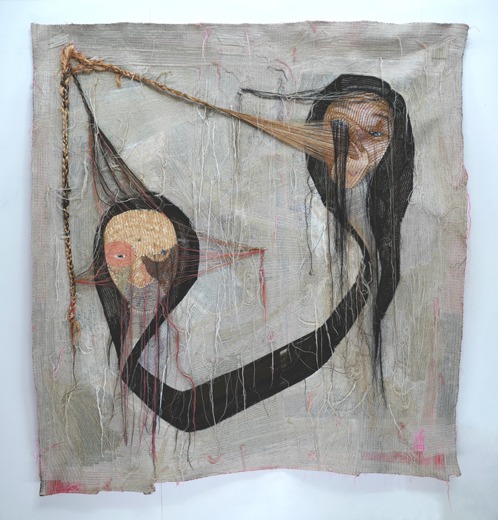
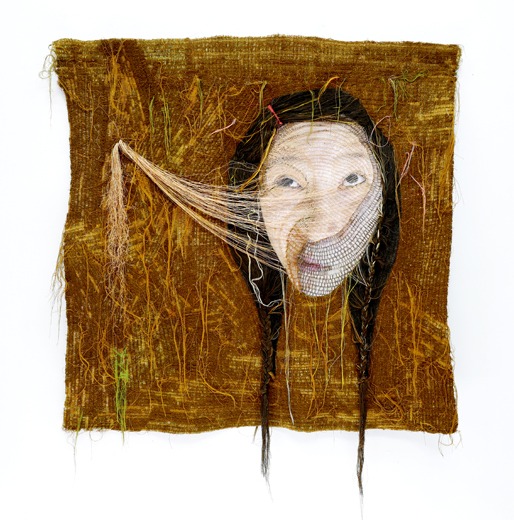
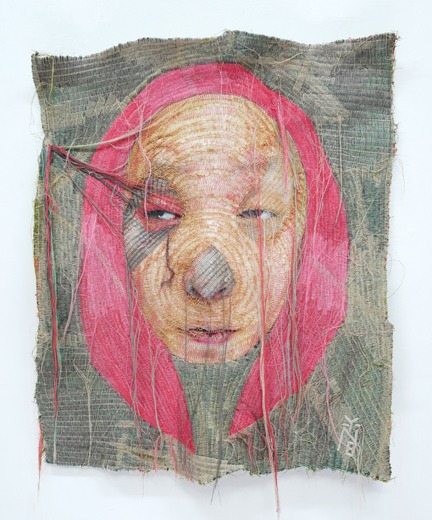
			Yoon Ji-sun, who has been working on a mix of her face and sewing with the gallery, has organized her 15th individual exhibition. The author worked to destroy the image of the picture and transform it into another face through repeated sewing. The series found the tangled "My Face" behind the surface of the face, not the surface of the face, and expressed the relationship between Treating sewing boldly on one's face like thread, brush and paint is trying to make one realize a firm point of view Unspeakable subtle meanings are real and stand out on the recreated face.
Yoon Ji-sun majored in painting at Hannam University and Western painting at the same graduate school.

The main line is as follows:
The holes are repeated consistently throughout the entire work process of the Yoon Ji-sun. What does the hole mean in Yun Ji-sun's work? The hole creates a crack and creates a gap between them. A hole through the surface creates a fragment, not a finished product. Hole, gap and gap disturb the image as a complete unit of what you see. The holes through the face photography rupture mirror images and reveal the fictional nature of narcissistic images. The imaginative self image, which was regarded as ideal self, complete unity, is divided and disintegrated.

At the level of unconsciousness, the subject of consciousness is only an imaginary fictional image like a narcissistic mirror image that identifies a fragmented body as a complete unity. The images of Yun Ji-sun's ragged face warped and disjointed image itself and aggressively visualized the divided entity. There is no narcissistic satisfaction as a whole, complete from the fragments of these fragments. The distorted facial areas, like deformed creatures, reveal an alienated unconscious subject with aggressive anxiety, not a conscious one that gives a unified satisfaction.

In addition, the writer visualizes the unconscious behind the consciousness as a two-sided image. The septic drawing, which controls and pushes the tangles of the colored room above and below the sewing machine, leaves behind a stain of different shapes. While filling the surface of the printed face with sewing machine needles and thread, there are traces of strange facial features on the other side. With the tension control of a rapid thinness, the threads on the fabric pull, push, and twist along the texture like the facial skin tissue. The threads that travel through countless holes leave a stain like a drawing line, repeating the conversational gesture toward unconsciousness. The stain and distorted image of Yun Ji-seon's appearance on the back of his face are visualizations of unconsciousness on the back of his consciousness. Behind the ceremony are the subconscious manifestations that are suppressed, unrepresented and subdued, according to Freud. A sense of unconsciousness is an area of desire in which suppressed things are expressed in the symbolic system of language, law and order The potential for man to pursue his natural relationship as a true subject is found in the realm of unconsciousness beyond consciousness.

In relation to the unconscious passage, the eyes are important in the ragged face. Yun Ji-sun always leaves her eyes behind, filling the ragged face with splashes. They can also draw eyes into the facial features that appear on the opposite side. The author says that if you even blanch your eyes, there is no sign left to represent yourself. The eyes left at this time are not considered eyes of a looking consciousness, but rather are considered passageways to the subject of unconsciousness. In Lakang, the organ of the eye has an important meaning. This is because the eyes provide a pathway to unconsciousness while also obstructing the way to unconsciousness. Through the organ of the eye, the field of vision, impulse of sight is expressed and in the chapter of division we encounter the unconscious subject of desire.

Yoon's ragged face divides the self image through cracks and holes and exposes a mark of unconsciousness and distorted figures that are not represented by the eyes of consciousness behind it. The area of the stuffed face is lengthened like debris, and the stitches that burst through the peels are stretched like hair. The self-image, which is considered to be a unity, is divided into holes and, in fact, the gap is sealed. The subject of unconsciousness is not certain and unifying, but fragmented and uncertain. It is not known when the suture will unravel and the unconscious desire will burst out from the gap in the hole. As long as one exists, one repeats the dictation of desire, a meeting with one's trauma. The stained face, which is also the author's own self-portrait, recurs toward the unconsciousness of desire.

The Rag face series was exhibited at Songun Art Cube, including Iluspace, and also at the Brickhouse and Yoshimilo Gallery in New York. About a dozen new Rag face series will be featured in the exhibition.


I take a picture of my face, which I didn't know, and then I work as if it were made by sewing. And this stitching has the charm of obtaining different images from the front and back through the same work process. The more we sew, the more twisted and unstructured we are working on the boundary between the plane and the body.
All the self-portraits painted in the mirror are facing themselves. This is because it is impossible to check one's own unfocused facial expression with a mirror. But photography has the charm of obtaining self-portraits of different eyes and facial expressions. The face of the self-portrait without face-to-face can get a face closer to reality, but people are unfamiliar with the face of the real person. This is because he looks at his face with other people's eyes. It is the discovery of a third person's ego in the first person.
■ Yoon Ji Sun


 Naver
Facebook
Kakao story
URL 복사
Naver
Facebook
Kakao story
URL 복사


